Ujigami | Top Smart Factory Solutions Company 2023

Ujigami
Transforming Manufacturing with Smart Factory Solutions

Share this Article:

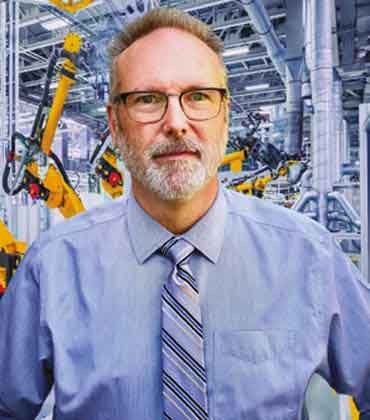
Edward Dickson, Ujigami | Manufacturing Tech Insights | Top Smart Factory Solutions CompaniesEdward Dickson, President and CEO
Smart factories have a history dating back years, but their accessibility was limited to larger companies with substantial investment capabilities. However, significant changes have occurred over the past decade, rendering smart factory capabilities available to a broader range of manufacturers. This shift in the marketplace has been substantial over the past decade and continues to gain momentum.

At the forefront of this transformative shift is Ujigami, developed by Tutelar Technologies. Ujigami offers a comprehensive solution, covering a broad spectrum of manufacturing needs, from product-directed manufacturing and advanced mistake-proofing to dock-to-dock management and control. One of its notable features is AI empowered IIoT, which actively controls the quality of each serialized unit throughout the complete production process, ensuring that products are defect-free before shipping.

Ujigami is designed with flexibility, scalability, and user-friendliness in mind, allowing its core module to be easily customized to meet clients’ requirements. It can also integrate additional functionalities, like scheduling, customer-order interfaces, warehouse management, performance metrics, advanced management reporting, and supplier-advanced shipping notifications. It seamlessly integrates with existing manufacturing software systems, serving as the central hub for coordination and reporting while streamlining operations.

“The advantages of Ujigami software extend beyond the factory floor. Clients can optimize their operations, eliminate inefficiencies, and deliver products with precision and speed by harnessing its smart manufacturing capabilities,” says Edward Dickson, president and CEO at Ujigami.

Thanks to technological advancements like AI vision, Ujigami can implement intelligent manufacturing systems that significantly reduce or completely eradicate the reliance on human labor.

This includes a shift from supervisory roles overseeing various work cells to deploying robotics and automation. Notably, plant floor manufacturing systems like Ujigami are instrumental in removing human operators from the manufacturing process.

Ujigami’s expertise is exemplified by a recent success story involving a client operating 20 injection molding machines with capacities ranging from 1000 to 2000 tons. During the COVID-19 pandemic, finding low-skilled machine operators became increasingly challenging. They turned to Tutelar for assistance in developing operator-free injection molding machine work cells.

Ujigami plays a pivotal role within these cells by directly interfacing with the material delivery system to ensure that the correct resins and colorants reach the injection molding machines. It also oversees an automated guided vehicle (AGV) system responsible for delivering the appropriate containers to the injection molding workstations and removing full containers. Automation, predominantly through robots, handles tasks like part extraction from the molding machines, gate removal, and packing into containers as they emerge from the machine.


The advantages of Ujigami extend beyond the factory floor. Clients can optimize their operations, eliminate inefficiencies, and deliver products with precision and speed by harnessing its smart manufacturing capabilities

Ujigami is the brain and central nervous system of the entire system, supervising and controlling the robots, molding machines, and containerization, ensuring that the produced parts meet stringent specifications. It guides the robot on where to place each part depending on the type of container delivered. The system operates seamlessly without human operators, effectively eliminating a previously crucial role in the injection molding work cell.

This transformation has enabled the work cell to operate continuously, 24/7, with minimal interruptions, except for essential tool changeovers. In the past, the reliance on human operators led to breaks and disruptions due to natural needs like bathroom and lunch breaks. Ujigami is leading the charge in reducing reliance on human labor and ensuring uninterrupted production through innovations like AI vision and intelligent automation. As we look to the future, it’s clear that smart factories are no longer a privilege of the few but a vital tool for a more efficient, precise, and responsive manufacturing world.
Deep Dive

Restoring Control in Manufacturing Execution Systems

Manufacturing execution systems have drifted from their original purpose. What began as a layer responsible for coordinating production, controlling processes and reporting outcomes has, in many environments, narrowed into a passive data collector. Reporting has migrated toward specialized business intelligence platforms, leaving many execution systems detached from the real-time decisions that determine throughput, quality and consistency on the plant floor. For executives evaluating modern manufacturing execution software, the central question is no longer how well a system captures data, but whether it can actively govern production as it unfolds. Effective systems distinguish themselves by their ability to coordinate machines, operators and process logic within a single, continuously responsive framework. Production environments operate at a level of variability that static scheduling or post-process reporting cannot address. Each unit may require different parameters, instructions or routing decisions depending on configuration, demand or upstream conditions. Systems that translate process plans into executable, unit-level instructions, then dynamically adjust equipment settings or routing decisions in real time, create a level of control that aligns output with specification without slowing throughput. Traceability remains a non-negotiable requirement, though its value depends on how it is generated. Static logs or batch-level records fall short when manufacturers need a complete, unit-level understanding of how a product was built. A more advanced approach captures every interaction between machine, operator and process condition, linking it to a single production instance. This produces a continuous record that reflects not only what was done, but whether each step met defined specifications before the product progressed. Such traceability strengthens compliance, reduces rework and supports faster root-cause analysis without introducing friction into the workflow. Operator coordination has emerged as another defining factor. Labor constraints and multilingual workforces introduce complexity that traditional systems rarely address. Systems that deliver step-specific, context-aware instructions tailored to each unit, combined with automatic language adaptation based on operator profiles, reduce ambiguity and training dependency. This ensures that execution quality does not vary with experience levels or language proficiency, preserving consistency across shifts and locations. The role of integration has also shifted. Rather than acting as a reporting hub, modern execution systems must function as a control layer that interfaces directly with equipment, enterprise systems and external analytics platforms. Data collection supports this role, though its primary purpose is to enable immediate validation and adjustment rather than retrospective analysis. Organizations increasingly prefer to pair such systems with independent analytics platforms, allowing reporting flexibility without compromising execution discipline. Ujigami reflects this transition by repositioning the execution system as an active controller of manufacturing processes. It connects directly to equipment, sensors and operator workflows, enabling it to manage both machine behavior and human actions in real time. It constructs and continuously manages a detailed, step-by-step production path for each unit, determining routing, parameters and sequencing while production is in motion. Its digital instruction framework ensures that operators receive precise, unit-specific guidance in their preferred language, improving clarity and consistency across the workforce. Its approach to traceability extends beyond standard logging by generating a complete production record for every unit, capturing process data, validation outcomes and supporting evidence such as images. This allows manufacturers to verify compliance at each stage before progression or release. Its integration model supports enterprise systems and external analytics platforms while maintaining control at the execution level. For organizations prioritizing real-time coordination, consistent output and full traceability without sacrificing speed, it presents a strong alternative to traditional manufacturing execution systems. ...Read more
Top 10 Smart Factory Solutions Companies - 2023

Company
Ujigami

Management
Edward Dickson, President and CEO

Description
Ujigami is an eponymous solution for ongoing digitization and control of the plant floor with AI-enabled devices and technologies. It is established as a leader in leveraging AI, reducing the reliance on people to ensure the factory works efficiently. Ujigami delivers intelligent manufacturing, identifying and eliminating waste from the manufacturing floor. It also offers insightful reports and dashboards to supervisors and managers for improved workflows.